
Nos nouvelles publications pour rester à jour dans tous les domaines
-
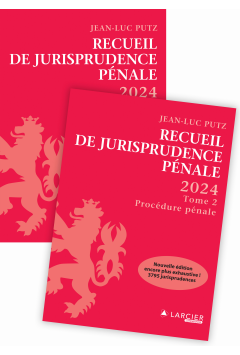 Recueil de Jurisprudence pénale 2024Tome 1 + Tome 2Code | 13e édition 2024 | Luxembourg | Jean-Luc Putz395,00 € TTC
 -
 Chroniques notariales - Volume 78Livre | 1ère édition 2024 | Belgique | Yves-Henri Leleu230,00 € TTC
 -
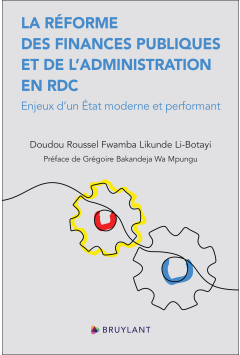 La réforme des Finances publiques et de l'Administration en RDCEnjeux d'un État moderne et performantLivre | 1ère édition 2024 | Monde | Doudou Roussel Fwamba Likunde Li-Botayi80,00 € TTC
 -
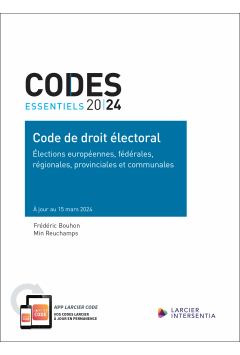 Code essentiel - Code de droit électoral 2024Élections européennes, fédérales, régionales, provinciales et communalesCode | 1ère édition 2024 | Belgique | Frédéric Bouhon, Min Reuchamps30,00 € TTC
 -
 Un nouveau droit international écologiqueHabiter autrement la TerreLivre | 1ère édition 2024 | Monde | Emmanuelle Tourme Jouannet45,00 € TTC
 -
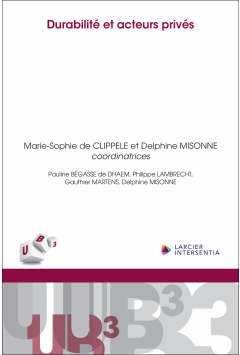 Durabilité et acteurs privésLivre | 1ère édition 2024 | Belgique | Marie-Sophie de Clippele, Delphine Misonne60,00 € TTC
 -
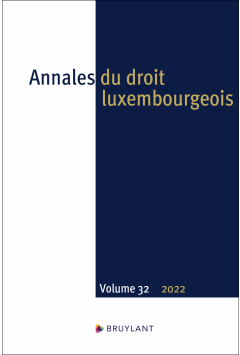 Annales du droit luxembourgeois. Volume 32 - 2022Livre | 1ère édition 2024 | Luxembourg | Alex Engel, Steve Jacoby, Dean Spielmann, Marc Thewes105,00 € TTC
 -
 L’identité numérique en constructionQuels enjeux et quels modèles ?Livre | 1ère édition 2024 | Europe | Jessica Eynard, Giorgia Macilotti95,00 € TTC
 -
 Actualités en droit pénal des affairesLivre | 1ère édition 2024 | Belgique | Maximilien Arnoldy, Mona Giacometti, Aurélie Verheylesonne60,00 € TTC
 -
 Les coopératives d'habitantsConditions de possibilité juridiques d’une formule innovante d’habitatLivre | 1ère édition 2024 | Belgique | Nicolas Bernard, Isabelle Verhaegen60,00 € TTC
 -
 Défédéraliser la justice ?Une étude de droit comparé juridico-politiqueLivre | 1ère édition 2024 | Belgique | Arvid Rochtus, Stefan Sottiaux125,00 € TTC
 -
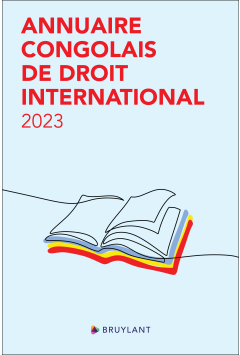 Annuaire congolais de droit international2023Livre | 1ère édition 2024 | Monde | Sayeman Bula Bula100,00 € TTC
 -
 Droit constitutionnel de la RoumanieLivre | 1ère édition 2024 | Europe | Elena-Simina Tanasescu80,00 € TTC
 -
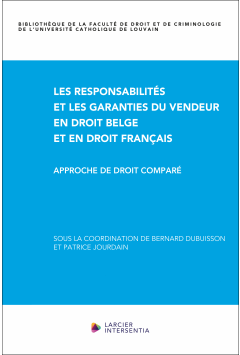 Les responsabilités et les garanties du vendeur en droit belge et en droit françaisApproche de droit comparéLivre | 1ère édition 2024 | Belgique, France | Bernard Dubuisson, Patrice Jourdain175,00 € TTC
 -
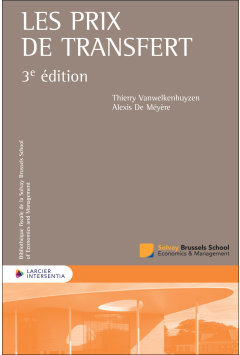 Les prix de transfertLivre | 3e édition 2024 | Belgique | Thierry Vanwelkenhuyzen, Alexis De Méyère130,00 € TTCPrix étudiant: 60,00 €
 -
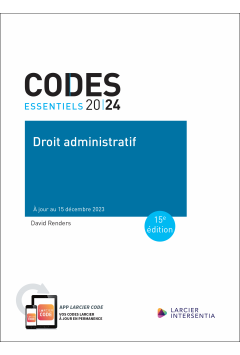 Code essentiel - Droit administratif 2024À jour au 15 décembre 2023Code | 15e édition 2024 | Belgique | David Renders95,00 € TTCPrix étudiant: 42,00 €
 -
 Droit administratifLivre | 1ère édition 2024 | Belgique | Michel Pâques165,00 € TTCPrix étudiant: 60,00 €
 -
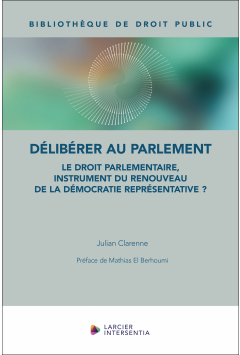 Délibérer au ParlementLe droit parlementaire, instrument du renouveau de la démocratie représentative ?Livre | 1ère édition 2024 | Belgique | Julian Clarenne150,00 € TTC
 -
 L'avenir de la justice pénale internationaleLivre | 2e édition 2024 | Monde | Jean Albert52,00 € TTC
 -
 Concilier santé et droits fondamentaux en période de pandémieUne analyse juridique des expériences de la France et du JaponLivre | 1ère édition 2024 | Monde | Guillaume Rousset, Philippe Pédrot, Tetsu Isobe, Haluna Kawashima90,00 € TTC
Nos formations pour enrichir vos connaissances
-
 Le juge à sa juste place en matière d’environnement et de climat ?Conférence de sortie de l’ouvrage Les grands arrêts inspirants du droit de l’environnementFormation | Mercredi 29 mai 2024 | Belgique | Marie-Sophie de Clippele, Delphine Misonne
 -
 Webinaire – Réforme de la responsabilité extracontractuelle : focus sur trois grandes nouveautés du livre 6Colloque | Mardi 11 juin 2024 | Belgique | Marine Boreque, Céline Hélas, Raphaëlle Deutsch
 -
 Intelligence artificielle et services financiersColloque anniversaire de la Revue internationale des services financiersColloque | Jeudi 13 juin 2024 | France
 -
 Webinaire – Rédiger des avis juridiques créateurs de valeurWebinaire | Jeudi 19 septembre 2024 | Belgique | Antoine Henry de Frahan
 -
 Webinaire – Gestion du risque pour les juristesWebinaire | Lundi 7 octobre 2024 | Belgique | Antoine Henry de Frahan
 -
 Colloque – La régularisation urbanistique : évolutions, aspects pratiques et incidences sur les contratsColloque | Jeudi 6 juin 2024 | Belgique | Lauriane Olivier, Joël van Ypersele
 -
 Webinaire – La déduction des surcoûts d'empruntWebinaire | Lundi 2 septembre 2024 | Belgique | Geoffroy Galéa, Cassandre Guéry
 -
 Formation – Survival Kit des juristes pour comprendre les éléments des états financiers d’une sociétéFormation | Jeudi 13 juin 2024 | Belgique | Olivier Fondeur
 -
 Webinaire de mise à jour ISOC – printemps 2024Webinaire | Lundi 13 mai 2024 | Belgique | Laura Dewez, Fabrice Grognard
 -
 Webinaire de mise à jour TVA – printemps 2024Webinaire | Lundi 27 mai 2024 | Belgique | Yves Bernaerts
 -
 Webinaire de mise à jour IPP – printemps 2024Webinaire | Jeudi 18 avril 2024 | Belgique | Steve Cocriamont
 -
 Naviguer dans le paysage ESG : des conseils juridiques pour la réussite des entreprisesWebinaire | Vendredi 17 mai 2024 | Belgique | Virginie Frémat
 -
 Masterclass Planification patrimoniale 2024 – Jour 2Formation | Mardi 14 mai 2024 | Belgique | François Derème
 -
 Masterclass Planification patrimoniale 2024 – Jour 3Formation | Mardi 21 mai 2024 | Belgique | François Derème
 -
 Formation – Initiation à la Communication NonViolenteJour 2Formation | Mardi 11 juin 2024 | Belgique | Patrick Kileste, Jean-Yves Lagasse de Locht
 -
 Formation – Initiation à la Communication NonViolenteJour 1Formation | Mardi 21 mai 2024 | Belgique | Patrick Kileste, Jean-Yves Lagasse de Locht
 -
 Masterclass ISOC 2024 – Le financement des entreprisesJour 2 pmFormation | Vendredi 14 juin 2024 | Belgique | Matthieu Bataille, Laura Dewez, Fabrice Grognard, Lionel Lambert, Baudouin Paquot, Véronique Tai, Jérôme Terfve
 -
 Masterclass ISOC 2024 – Les dispositions anti-abus à l'ISOCJour 2 amFormation | Vendredi 14 juin 2024 | Belgique | Matthieu Bataille, Laura Dewez, Fabrice Grognard, Lionel Lambert, Baudouin Paquot, Véronique Tai, Jérôme Terfve
 -
 Masterclass ISOC 2024 – Les opérations de clôture en fin d'exerciceJour 3Formation | Vendredi 11 octobre 2024 | Belgique | Matthieu Bataille, Laura Dewez, Fabrice Grognard, Lionel Lambert, Lionel Lambert de Rouvroit, Baudouin Paquot, Véronique Tai, Jérôme Terfve
 -
 Webinaire – Balade dans les voies sinueuses des droits d’enregistrementWebinaire | Mardi 4 juin 2024 | Belgique | André Culot
Nos solutions digitales pour que vous puissiez gagner du temps pour vous et vos clients
-
 Revue de droit commercial belge – Tijdschrift voor Belgisch HandelsrechtRevue | Abonnement 2024 - 10 numéros par an | Belgique
 -

-

-

-

-

-
 Mon Astuces & ConseilsDes conseils sur mesure pour votre profilBase de données | Abonnement 1 an | Belgique
 -

-
 TaxWin Praxis | AccountantsPour les professionnels de la comptabilité et de la fiscalitéBase de données | Abonnement 1 an | Belgique1 431,00 € TTC
 -
 TaxWin Expert | SilverPour les fiscalistes et les expertsBase de données | Abonnement 1 an | Belgique2 501,60 € TTC
 -
 TaxWin Expert | GoldPour les fiscalistes et les expertsBase de données | Abonnement 1 an | Belgique3 566,90 € TTC
 -
 Les Codes Larcier – République démocratique du CongoVersion en ligne à jour en permanenceBase de données | Abonnement 1 an | Monde | Alex Kabinda Ngoy968,00 € TTC
 -
 PCA-VOB – Pour un calcul objectif des contributions alimentairesLogiciel de calculLogiciel | Abonnement 1 | Belgique | Roland Renard, Pierre-André Wustefeld357,00 € TTC
 -

-

-

-

-

-


Nos solutions digitales pour que vous puissiez gagner du temps pour vous et vos clients

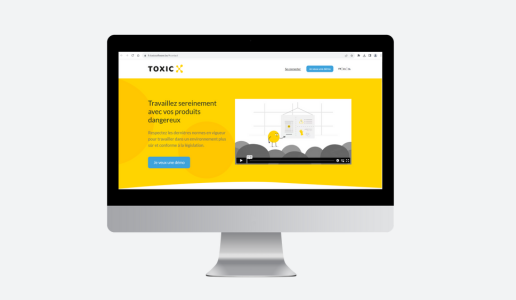
Easydrafting pour personnaliser facilement vos documents juridiques
Une façon rapide et intuitive de générer des documents juridiques sur mesure
Easydrafting vous fait gagner un temps précieux en vous permettant de constituer facilement des documents juridiques sur mesure.
Il vous suffit de choisir un modèle dans la bibliothèque et de le personnaliser en quelques clics. Notre questionnaire interactif vous guide étape par étape pour une rédaction automatisée de vos actes et contrats.
Vous avez également la possibilité d’ajouter vos propres modèles afin de les exploiter plus facilement.

Nouveau dans la collection Astuces et Conseils
-
 Le livre de poche de l'indépendantAdapté aux nombreuses modifications législatives récentesLivre | 13e édition 2024 | Belgique | L'équipe rédactionnelle Astuces & Conseils82,00 € TTC
 -
 Mariage, cohabitation légale et cohabitation de faitQuelles sont pour l’indépendant que vous êtes les conséquences pratiques, fiscales et juridiques de votre choix ?Livre | 2e édition 2024 | Belgique | Martin Vanden Eynde165,00 € TTC
 -
 Manuel pratique pour celui qui envisage un licenciement pour motif graveLivre | 2e édition 2024 | Belgique | Hervé Deckers135,00 € TTC
 -
 Comment licencier en toute sécurité moyennant un délai ou une indemnité de préavis ?Questions et réponses issues de la pratiqueLivre | 3e édition 2024 | Belgique | Hervé Deckers135,00 € TTC
 -
 Les règles actuelles relatives au bail commercial et aux autres baux professionnelsGuide pratique pour le bailleur et le locataireLivre | 8e édition 2024 | Belgique | L'équipe rédactionnelle Astuces & Conseils135,00 € TTC
 -
 L'abc des frais déductibles de l'indépendant en nom personnelLa garantie de communiquer à votre comptable tous les postes de frais déductibles potentielsLivre | 16e édition 2024 | Belgique | Didier Crahay, Guy Ceresetti, Dominique Darte165,00 € TTC
 -
 Comment retirer au mieux de l’argent de votre société ?Guide pour un retrait d’argent fiscalement avantageux pour le dirigeant d’entrepriseLivre | 1ère édition 2024 | Belgique | Felix Vanden Heede165,00 € TTC
 -
 Aperçu global de la législation sur le bail d'habitation dans les trois RégionsDes astuces & conseils pour agir en toute sécurité juridiqueLivre | 13e édition 2024 | Belgique | L'équipe rédactionnelle Astuces & Conseils135,00 € TTC
 -
 L'abc des frais déductibles de votre sociétéComment faire assumer un maximum de frais par votre société en 2024 ?Livre | 16e édition 2024 | Belgique | Guy Ceresetti, Didier Crahay, Dominique Darte165,00 € TTC
 -
 Investir les liquidités accumulées par votre société : via votre société ou à titre privé ?Livre | 4e édition 2024 | Belgique | David De Backer135,00 € TTC
 -
 Cesser votre activité indépendante anticipativement, à la date de votre pension ou continuer ?Quelles en sont les conséquences sur le plan fiscal, social et financier ?Livre | 9e édition 2024 | Belgique | Wim De Buyser, Jos Coomans135,00 € TTC
 -
 Comment retirer de votre société une rémunération optimale sur le plan fiscal ?Calculer et retirer votre rémunération sans payer trop d’impôtsLivre | 10e édition 2024 | Belgique | Hervé Deckers135,00 € TTC
 -
 L’impact de la réforme TVA à partir du 1er janvier 2025 : comment l’appréhender ?L’impact de la réforme sur vos déclarations et paiements/crédits TVALivre | 2e édition 2024 | Belgique | Sandrina Procek165,00 € TTC
 -
 Le grand guide des impôtsToute l'information fiscale essentielle pour les dirigeants d'entreprise, les indépendants, les professions libérales et leurs conseillersLivre | 8e édition 2024 | Belgique | Florence Goffinet215,00 € TTC
 -
 20 techniques pour réaliser une donation sans payer de droits de donationCe que vous devez savoir au préalable !Livre | 1ère édition 2024 | Belgique | Thomas Roelands, Olivier Doms, Minne Corentin165,00 € TTC
Nos articles et contenus gratuits pour décrypter l'actualité
Livre blanc

Fiscal | Octobre 2023
La loi anti-blanchiment actuelle est-elle pour vous un terrain inconnu ? Ce livre blanc vous aide dans cette démarche et résume tout ce que vous devez savoir sur la loi anti-blanchiment.
Téléchargez-le.
Notre dernière interview

Droit judiciaire | Octobre 2023
Mediation Week 2023 | Journal des modes alternatifs
La "Mediation Week" s'est tenue cette année, du 9 au 14 octobre 2023. Chaque jour de la semaine, des contributeurs du Journal des modes alternatifs ont abordé un sujet lié à la médiation, offrant ainsi une perspective diversifiée sur cette pratique. En savoir plus ici.
Le podcast de la JLMB

Droits de l'homme | Novembre 2023
N° 2023/38 – L'accueil des migrants : la fin de l'état de droit ? | Patrick Henry
Dans cet épisode du podcast de la revue de Jurisprudence de Liège, Mons et Bruxelles, l'avocat Patrick Henry aborde le sujet suivant : l'accueil des migrants : la fin de l'état de droit ?
En savoir plus ici.
 Auteurs spécialisés
 Paiements 100% sécurisés
 Des questions sur nos produits ?